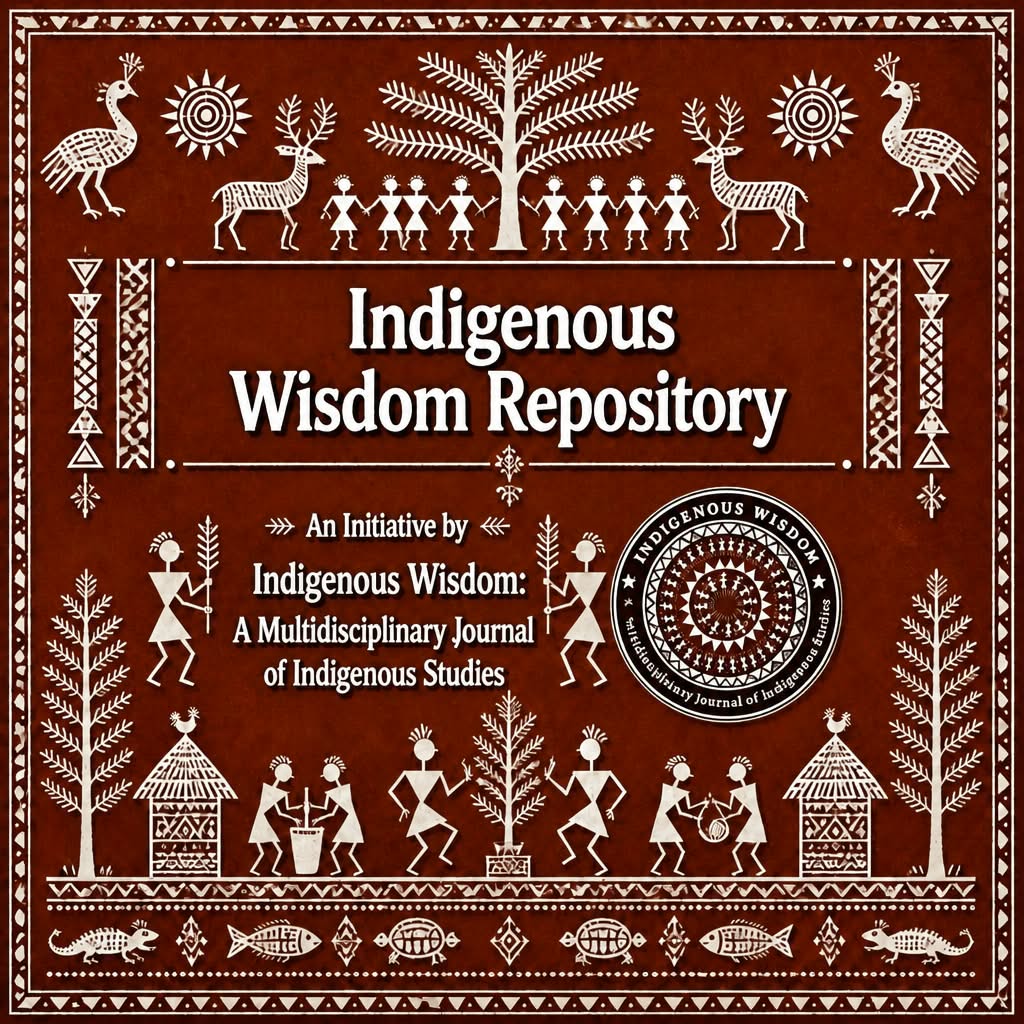
About IWR
Amidst escalating environmental instability, cultural homogenization, and aggressive digitalization, contemporary quantitative scientific paradigms frequently fail to address systemic ecological degradation. Consequently, Indigenous Knowledge Systems (IKS) and Traditional Ecological Knowledge (TEK) emerge as indispensable frameworks for global survival, offering holistic, relational methodologies for biodiversity conservation and sustainable agriculture.
However, these invaluable human heritages face critical threats from cultural displacement, linguistic endangerment, and corporate biopiracy.In response, the Indigenous Wisdom Repository (IWR), spearheaded by Indigenous Wisdom: A Multidisciplinary Journal of Indigenous Studies, establishes an ethically structured digital platform to document, safeguard, and revitalize ancestral heritage.
Functioning as a defensive strategy for cultural and ecological preservation, the IWR champions Indigenous Data Sovereignty by counteracting extractive academic models. The repository effectively safeguards sensitive ethnobotanical and sacred assets through an ethical framework that honors community consent and intellectual rights.In the future, the IWR will serve as a vital blueprint for planetary resilience. It provides global policy makers and conservationists with a validated primary archive of localized ecological strategies while offering authentic source materials for descendant language reclamation programs.
Most importantly, by enforcing the absolute community right to data revocation, the IWR establishes a transformative legal precedent for digital intellectual property, shifting the paradigm of digital archiving from technological exploitation to structural community empowerment.
Scopes:
Traditional Ecological Knowledge (TEK): Documentation of centuries-old sustainable agricultural practices, localized soil enrichment techniques, traditional forestry, micro-climate prediction methodologies, and water resource management systems.
Linguistic Heritage & Oral Traditions: Preservation of unwritten dialects, oral epics, historical narratives, folklore, and performance traditions to combat the absolute erasure of ecological and cultural data caused by language extinction.
Material Culture & Indigenous Arts: Digital indexing and conservation layout for traditional textile heritage, indigenous architectural elements, tool-making techniques, and sacred or secular visual art lineages.
Philosophy, Customary Law, & Governance: Archiving indigenous epistemologies, holistic worldviews, tribal sovereignty systems, customary legal structures, and relational frameworks bridging community life with natural ecosystems.
Ethnobotany & Ethnomedicine: Meticulous recording of traditional medicinal plants, specialized healing practices, and holistic health systems (strictly managed via secure, community-governed access tiers to prevent corporate biopiracy).
Objectives:
To Safeguard Vulnerable Heritage: Systematically document and digitally preserve fragile oral histories, dialects, and traditions vulnerable to displacement and urbanization.
To Advance Planetary Resilience: Curate a validated primary database of Traditional Ecological Knowledge (TEK) to inform global climate adaptation, sustainable agriculture, and forestry management.
To Enforce Data Sovereignty: Implement the CARE Principles of Data Governance, ensuring Indigenous communities maintain absolute authority, ownership, and control over their digitized data.
To Combat Corporate Biopiracy: Shield sensitive ethnobotanical information and local medicinal practices from unauthorized commercial exploitation and corporate patenting.
To Protect Sacred Knowledge: Establish secure, tiered access protocols that lock away esoteric or secret rituals from public web scrapers and unauthorized users.
To Mitigate Linguistic Erasure: Archive unwritten dialects, storytelling traditions, and oral epics to preserve the intricate ecological and cultural data embedded within native languages.
To Standardize Ethical Consent: Mandate a rigorous verification system requiring researchers to upload proof of Free, Prior, and Informed Consent (FPIC) before submitting work.
To Guarantee Revocation Rights: Establish a revolutionary legal and digital precedent by guaranteeing contributing communities the absolute right to restrict or delete their data at any time.
To Empower Native Lineages: Provide a secure digital sanctuary and authentic materials that descendant generations can access for language reclamation and cultural revitalization.
To Foster Equitable Scholarship: Provide a peer-reviewed, multidisciplinary open-access space that properly credits indigenous knowledge holders as primary co-authors and creators rather than passive research subjects.
Submission Rules & Regulations for Researchers
To ensure ethical collection and prevent the exploitation of Indigenous Knowledge Systems (IKS), researchers must adhere to the following protocol before submitting data:
1. Verification of Consent & SovereigntyFPIC Mandate: Researchers must upload proof of Free, Prior, and Informed Consent (FPIC) signed or recorded by the community elders, tribal council, or authorized local leaders. Please find the Template here.
Co-Authorship / Credit: Submissions must explicitly attribute the knowledge holders. Indigenous community members involved should be credited as co-creators or primary sources, not just anonymous subjects.
CARE Principles: All data must comply with the CARE Principles for Indigenous Data Governance (Collective Benefit, Authority to Control, Responsibility, Ethics).
2. Data Sensitivity & CategorizationSacred/Secret Filtering: Researchers must verify that the submitted data does not contain sacred, esoteric, or sensitive rituals intended strictly for community eyes.
Biopiracy Prevention: Documentation of medicinal plants or biological resources must not include exact geographic coordinates or extraction methods that could facilitate commercial patenting without community shares.
3. Metadata & Technical StandardsFormat Diversity: The archive accepts High-Definition video (MP4), lossless audio (WAV/FLAC), high-resolution images (TIFF/PNG), and text documents (PDF/A).
Contextual Metadata: Every submission must include a metadata sheet detailing the date of collection, geographic origin, language/dialect spoken, and the cultural context of the data.
4. Post-Submission OwnershipRight to Revoke: The contributing Indigenous community retains absolute ownership. If at any point the community requests the removal or restriction of a dataset, the archive will comply immediately.
Non-Commercial License: All accepted data will be housed under a Creative Commons Attribution-NonCommercial-NoDerivatives (CC BY-NC-ND) license to block corporate exploitation.
5. Scholarly Validation & Peer RecognitionRigorous Academic Credibility: Submissions undergo a transparent validation workflow that reviews contextual metadata accuracy and ethical compliance (such as verifying Free, Prior, and Informed Consent (FPIC)).
Primary Attribution and Co-Creation Equity: The repository mandates that indigenous knowledge holders and researchers are explicitly credited as primary authors or co-creators, shifting away from outdated models where communities were treated as anonymous subjects.
Self-Archiving Permissions: In accordance with the journal's Self-Archiving Policy, researchers receive flexible rights to self-archive their preprint, peer-reviewed, or postprint versions under official institutional channels
How to Submit:
Please submit collected or documented data to editor@indigenouswisdom.in